Programmatic Advertising 101: What It Is, How RTB Works and Key Terms Every Marketer Must Know
New to programmatic advertising? This complete beginner’s guide explains what programmatic is, how real-time bidding (RTB) works, and the key terms every digital marketer needs to know
What is Programmatic Advertising?
Programmatic advertising is the automated buying and selling of digital ad inventory using software and data — replacing the traditional manual process of negotiating, ordering and placing ads.
Instead of a media buyer calling a publisher, agreeing a price and manually booking ad space, programmatic technology does all of this automatically in milliseconds — every single time a web page loads or an app opens.
Think of it this way. When you open Cricbuzz to check the IPL score, the ad you see in the next 0.1 seconds was bought, bid on, won and served through a fully automated programmatic system — all before the page finished loading.
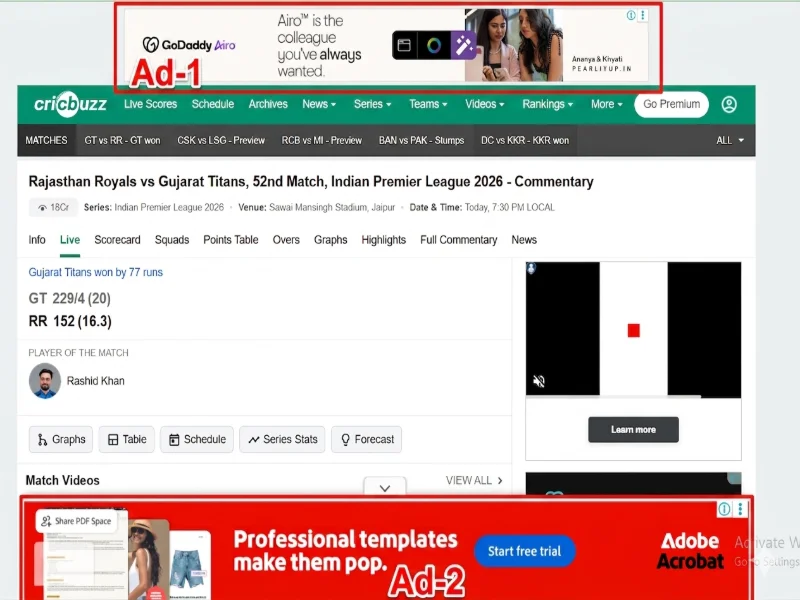
This is the foundation of modern digital advertising — and understanding it is essential for every marketer, media buyer and ad ops professional working today.
Why Programmatic Advertising Matters
Before programmatic, buying digital ads looked like this:
A media buyer would contact a publisher (say, Times of India or Cricbuzz), negotiate a CPM rate, sign an insertion order, send creative assets, and wait for the campaign to go live. The whole process could take days or weeks.
Programmatic changed everything by making this instant, data-driven and scalable. Today, a single programmatic campaign can run across thousands of websites and apps simultaneously — reaching the right audience at the right time at the right price — automatically.
The global programmatic advertising market is worth over $500 billion and growing rapidly. In India alone, programmatic now accounts for the majority of all digital display advertising spend.
How Programmatic Advertising Works — Step by Step
Here is what happens in the fraction of a second between a user loading a web page and an ad appearing on their screen:
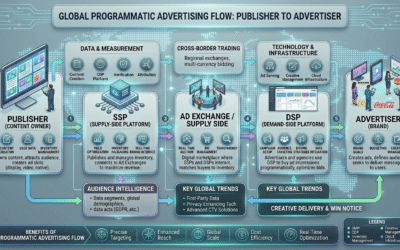
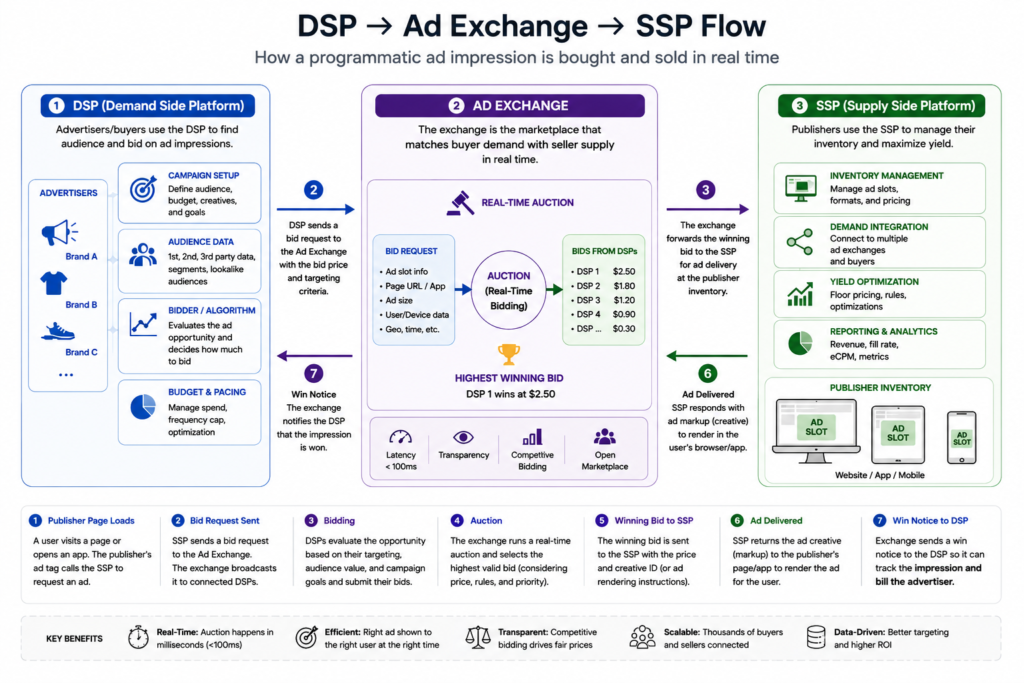
Step 1 — User visits a website or opens an app A reader opens NDTV or a cricket fan opens Cricbuzz. The moment the page starts loading, the publisher’s ad server recognises that an ad impression is available.
Step 2 — Impression data is sent to the SSP The publisher’s Supply Side Platform (SSP) packages information about this impression — the user’s device, location, browser, the page content, and any audience data available — and sends it to the ad exchange.
Step 3 — Bid request goes out to DSPs The ad exchange sends a bid request to multiple Demand Side Platforms (DSPs) simultaneously. Each DSP represents multiple advertisers who might want to show an ad to this particular user.
Step 4 — DSPs evaluate and bid Each DSP checks its advertisers’ targeting criteria against the impression data. If the user matches an advertiser’s target audience — the right age, location, interest, device — the DSP places a bid in real time.
Step 5 — Auction runs and winner is selected The ad exchange runs an auction (typically a second-price auction) and the highest bidder wins. The winning advertiser pays just above the second-highest bid.
Step 6 — Ad is served The winning ad creative is instantly delivered to the user’s browser or app. The whole process — from page load to ad appearing — takes less than 100 milliseconds.
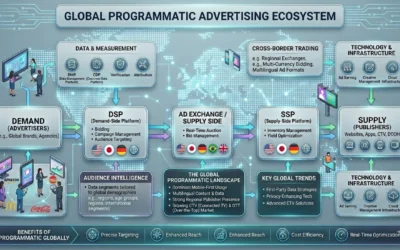
The Programmatic Ecosystem — Key Players
Advertiser
The brand or company that wants to show ads. They set the budget, define the audience and provide the creative assets. Examples: Samsung, Coca-Cola, Flipkart.
DSP — Demand Side Platform
Software used by advertisers and media agencies to buy ad inventory programmatically. The DSP connects to multiple ad exchanges and SSPs, allowing buyers to reach audiences across thousands of publishers from a single interface.
Major DSPs include: Google DV360, The Trade Desk (TTD), Amazon DSP, Xandr, MediaMath.
SSP — Supply Side Platform
Software used by publishers to sell their ad inventory programmatically. The SSP connects the publisher’s inventory to multiple ad exchanges and DSPs, maximising the yield (revenue) from each impression.
Major SSPs include: Google Ad Manager (GAM), PubMatic, Magnite, Index Exchange, OpenX.
Ad Exchange
The marketplace where DSPs and SSPs connect to transact. The ad exchange runs the real-time auction and facilitates the buying and selling of impressions.
DMP — Data Management Platform
A platform that collects and organises audience data from multiple sources — first-party data, third-party data, CRM data — and makes it available for targeting in the DSP.
Ad Server
Technology that stores ad creatives, serves them to users and tracks delivery, impressions, clicks and conversions. Google Campaign Manager 360 (CM360) is the most widely used ad server.
Real-Time Bidding (RTB) Explained
Real-Time Bidding is the auction mechanism at the heart of programmatic advertising. It is what makes the whole system work in milliseconds.
In an RTB auction:
- The SSP puts an impression up for auction
- Multiple DSPs submit bids simultaneously
- The highest bid wins
- The winner pays the second-highest bid plus one cent (this is called a second-price auction)
- The winning ad is served
Why second-price auction? Because in a first-price auction, every bidder would submit artificially low bids to avoid overpaying. In a second-price auction, the rational strategy is to bid your true maximum value — which leads to fairer pricing for everyone.
However, the industry has been shifting toward first-price auctions since 2019, where the winner pays their exact bid. This is now the standard across most major exchanges.
Types of Programmatic Buying
Not all programmatic transactions work the same way. There are four main deal types:
1. Open Auction (Open RTB)
The most common type. Any buyer with access to the exchange can bid on available inventory. It offers the widest reach but less control over premium placements.
2. Private Marketplace (PMP)
A publisher invites specific buyers to participate in a private auction. PMP deals offer access to premium inventory that is not available in the open auction. The publisher sets a floor price and only invited DSPs can bid.
3. Preferred Deal
A one-to-one arrangement where a publisher offers a specific buyer first right of refusal on inventory at a fixed CPM before it goes to auction. No guarantee of volume — but priority access.
4. Programmatic Guaranteed (PG)
The programmatic equivalent of a direct IO deal. The buyer and publisher agree on a fixed price, fixed volume and fixed targeting. Delivery is guaranteed. This is used for premium, high-value placements like homepage takeovers or IPL sponsorships.
Key Programmatic Metrics You Must Know
CPM — Cost Per Mille
The cost per 1,000 ad impressions. The standard pricing model in programmatic display advertising.
Formula: CPM = (Total Spend / Total Impressions) × 1,000
eCPM — Effective CPM
The effective revenue per 1,000 impressions. Used by publishers to measure yield across different deal types.
CTR — Click-Through Rate
The percentage of impressions that resulted in a click.
Formula: CTR = (Clicks / Impressions) × 100
VCR / VTR — Video Completion Rate / View-Through Rate
The percentage of video ad impressions that were watched to completion.
Viewability
The percentage of impressions where the ad was actually visible to the user. The MRC standard defines a display ad as viewable if at least 50% of its pixels are visible for at least 1 continuous second.
Win Rate
In RTB, the percentage of bid requests where the DSP won the auction.
Formula: Win Rate = (Bids Won / Bids Submitted) × 100
Fill Rate
For publishers — the percentage of ad requests that resulted in a served ad.
Formula: Fill Rate = (Filled Impressions / Total Ad Requests) × 100
Key Programmatic Terms Glossary
| Term | Definition |
|---|---|
| Bid Request | The message sent by the SSP to DSPs inviting bids on an impression |
| Bid Response | The DSP’s reply containing the bid price and ad creative details |
| Floor Price | The minimum CPM a publisher will accept for an impression |
| Deal ID | A unique identifier for a PMP or PG deal between a buyer and seller |
| Ads.txt | A text file on a publisher’s domain listing authorised sellers of their inventory |
| Sellers.json | A file that identifies all supply chain participants in a transaction |
| Supply Path Optimisation (SPO) | The process of identifying the most direct and efficient path to publisher inventory |
| Frequency Cap | A limit on how many times a specific user sees a specific ad |
| Audience Segment | A group of users defined by shared characteristics — demographics, interests, behaviour |
| First-Party Data | Data collected directly by the publisher or advertiser from their own users |
| Third-Party Data | Data purchased from external providers to supplement targeting |
| Cookie | A small file stored in a user’s browser used to track their behaviour across websites |
| IDFA | Identifier for Advertisers — Apple’s mobile device identifier for ad targeting |
| GAID | Google Advertising ID — Android’s equivalent of IDFA |
| ACR Data | Automatic Content Recognition — data from Smart TVs tracking what content is being watched |
| Header Bidding | A technique where publishers offer inventory to multiple DSPs simultaneously before calling their primary ad server |
| Waterfall | The older sequential bidding model where SSPs were called one at a time in priority order |
Common Programmatic Advertising Formats
Display Advertising Banner ads in standard IAB sizes — 300×250 (Medium Rectangle), 728×90 (Leaderboard), 160×600 (Wide Skyscraper), 300×600 (Half Page).
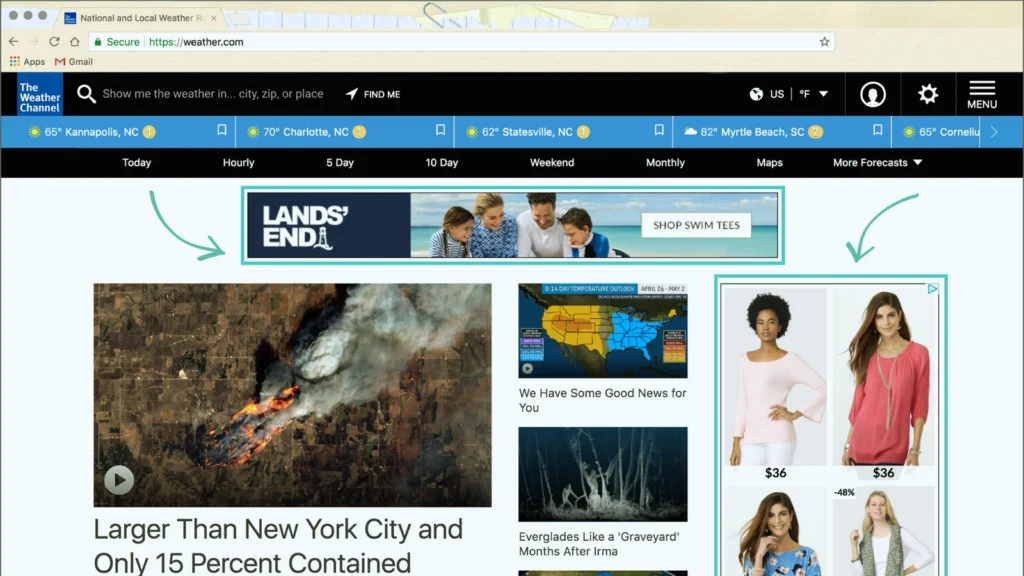
Video Advertising Pre-roll, mid-roll and post-roll video ads. Key formats include VAST (Video Ad Serving Template) and VPAID.
Native Advertising Ads that match the look and feel of the surrounding content — sponsored articles, in-feed ads, content recommendations.

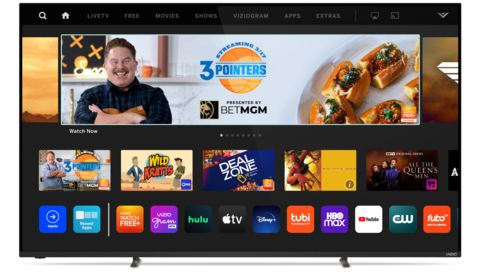
Connected TV (CTV) Programmatic ads served on Smart TVs, streaming devices (Roku, Fire TV) and OTT platforms like Hotstar, JioCinema, SonyLIV.
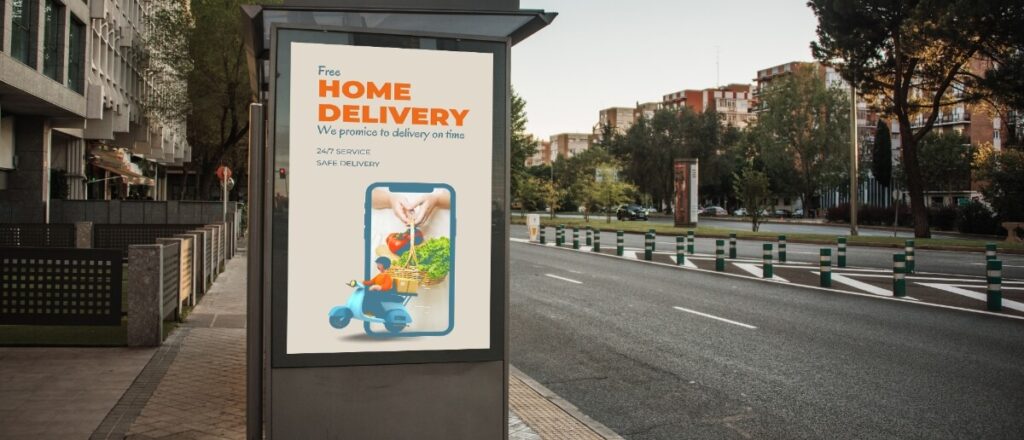
Digital Out-of-Home (DOOH) Programmatic buying of digital billboard and screen inventory in public spaces.
Audio Programmatic ads served in music streaming (Spotify, Gaana) and podcast content.
Programmatic vs Direct Buying — Key Differences
| Programmatic | Direct / IO | |
|---|---|---|
| Buying Process | Automated, real-time | Manual, negotiated |
| Speed | Milliseconds | Days to weeks |
| Targeting | Audience-based, data-driven | Context and placement-based |
| Pricing | Dynamic, auction-based | Fixed CPM |
| Scale | Thousands of publishers | One at a time |
| Inventory | Open market + premium PMP | Specific premium placements |
| Transparency | Variable | High |
| Best For | Scale and efficiency | Premium, brand-safe placements |
India’s Programmatic Advertising Market
India is one of the fastest-growing programmatic markets in Asia Pacific. Key drivers include:
- Smartphone penetration — India now has over 700 million smartphone users, creating massive mobile inventory
- CTV growth — IPL streaming on Hotstar and JioCinema has made Connected TV one of the fastest-growing programmatic channels
- OTT expansion — Platforms like Netflix, Amazon Prime, MX Player and Zee5 are opening inventory to programmatic buyers
- Digital-first brands — India’s e-commerce and fintech sectors are heavy programmatic spenders
- Improving data infrastructure — Better first-party data practices are improving targeting accuracy post-cookie
Major DSPs active in India: Google DV360, The Trade Desk, Amazon DSP, Xandr, MediaMath, InMobi. Major SSPs active in India: Google Ad Manager, PubMatic, Magnite, Index Exchange, InMobi, Chocolatey.
What Comes Next
Now that you understand the basics of programmatic advertising, you are ready to go deeper into specific areas:
- DV360 Complete Guide — How to set up and run campaigns in Google’s flagship DSP
- What is a PMP Deal? — How to set up, negotiate and troubleshoot private marketplace deals
- The Trade Desk Guide — Inside TTD’s Kokai platform and how to use it
- CTV Advertising Guide — How programmatic works on Smart TVs and streaming platforms
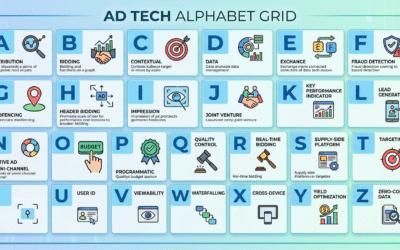
- Programmatic Glossary A–Z — 100+ terms defined